 Crows, ravens, jays, and magpies are adaptable, but that does not mean they are free from threat, and a few simple actions can help them thrive.


The House Always Wins? Rethinking Luck, Skill, and Strategy
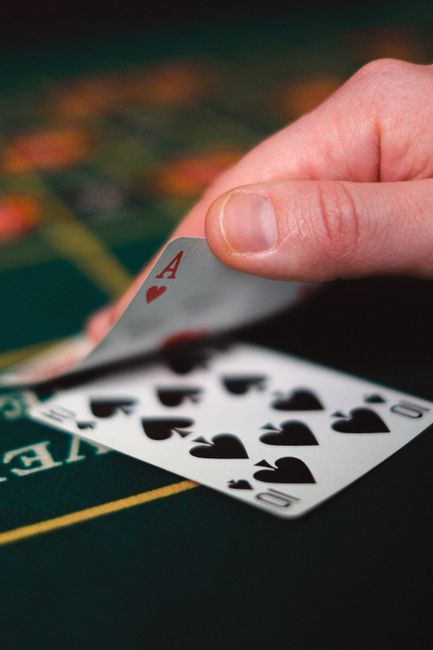
Ask ten people why they gamble and you'll get ten different answers, but almost all of them circle back to one idea: the belief that this time, things will go differently. The slot that hasn't paid out in an hour is "due." The poker table has been cold all night, so a hot streak must be around the corner. The accumulator that lost by one leg last weekend is destined to land this time. iGaming is built on these stories we tell ourselves, and the operators know it. But here's the thing most players never fully internalize: the games don't care about your story. They care about math. Understanding that distinction won't kill the fun, but it will change how you play, and almost certainly for the better.
The Randomness Trap
Every slot spin, every roulette wheel drop, every hand of blackjack is an independent event. That's a clinical way of saying the machine has no memory. If a slot has an RTP of 96%, it doesn't "owe" you 96% back over your session. That number is calculated over millions of spins and represents a statistical average of return to all players across the game's lifetime. Your individual session could return 300% or 0%. Both outcomes are fully compatible with a 96% RTP. Further details are available through สล็อต.
This is where the gambler's fallacy does its damage. The idea that a cold machine is "due" for a hot streak is the same flawed logic that makes people bet on red after ten blacks on a roulette table. The wheel has no idea what color just came up. Neither does the slot's random number generator, which reseeds itself on every spin and delivers outcomes independent of everything that came before.
Where this gets interesting is that not all games treat probability the same way. Slots are almost pure chance. Blackjack and poker, on the other hand, blend chance with decision-making. That difference matters enormously, and it's the reason serious players tend to gravitate toward games where their choices actually influence the outcome.
Skill vs. Luck: Where the Line Actually Sits
The house edge is the single most useful number in iGaming, and it varies wildly across game types. Here's a rough comparison of what you're up against per bet, on average:
- Blackjack (basic strategy): around 0.5% house edge
- Baccarat (banker bet): approximately 1.06%
- European roulette: 2.7%
- American roulette: 5.26% (the extra zero is brutal)
- Slots: typically 2% to 10%, with some tighter machines pushing higher
- Video poker (Jacks or Better, optimal play): as low as 0.5%
That gap between blackjack and slots is not a rounding error. Over hundreds of hands, it's the difference between a slow bleed and a quick one. The catch with blackjack and video poker is that the low house edge only applies if you play correctly. Basic strategy for blackjack is a memorized chart of decisions covering every combination of your hand versus the dealer's upcard. Play by gut instead of by chart, and you can easily hand the house a 2% to 4% edge without realizing it.
Poker sits in its own category entirely, because you're not playing against the house. You're playing against other people, and the house just skims a rake. In poker, a skilled player can have a genuine long-term edge over weaker opponents. That's why poker is the only mainstream casino game where "professional" is a realistic job title.
Bankroll Management: The Skill Nobody Talks About
Here's a statistic that should reframe how you think about session planning. If you sit down with 20 betting units and bet one unit at a time on an even-money bet, your risk of going broke in a session is significant even with a fair game. Variance is not a gentle curve; it's a series of violent swings that can wipe out a thin bankroll before your edge has any chance to show up.
Solid bankroll management comes down to a few non-negotiable rules:
- Separate gambling money from life money. If losing it would affect your rent, groceries, or savings, it doesn't belong on the table.
- Size your bets relative to your bankroll, not your mood. A common benchmark is 1% to 2% of your total bankroll per bet. If you have $500 set aside, that's $5 to $10 per unit, not $50.
- Set a loss limit before you start, and honor it. The hardest part of gambling is walking away while you still have chips. Do it anyway.
- Set a win limit too. Deciding in advance that you'll cash out at a certain profit stops the classic pattern of giving it all back on one final hand.
The players who last are not the ones who hit the biggest single win. They're the ones who survive long enough for the math to work in their favor, or who simply stop playing games where it never will.
Reading the Fine Print: Bonuses, Wagering, and RTP
Online casinos compete hard for players, and welcome bonuses are the front line of that battle. A 100% match up to $500 sounds generous until you read the terms. That's where wagering requirements live, and they can be brutal.
A common setup is a 35x wagering requirement on the bonus amount. If you deposit $100 and get a $100 bonus, you need to wager $3,500 before you can withdraw any of it. On slots with a 4% house edge, that's an expected loss of $140 across those wagering requirements, which exceeds the bonus itself. The bonus is not free money; it's a marketing tool with a built-in house advantage.
Lower wagering requirements, game weighting (slots usually count 100%, table games often 10% or less), and maximum bet caps during wagering all shape whether a bonus is actually worth taking. If a promo requires 50x wagering with a max bet of $5 and excludes the games you actually enjoy, it's not a bonus. It's a trap dressed up as one.
The same skepticism applies to RTP. Two slots from different providers might look identical in theme and volatility, but one pays 96.5% and the other 92%. Over hundreds of thousands of spins, that difference is the operator's profit margin, and it comes straight out of player pockets. Reputable game providers publish RTP data, and it's worth checking before you commit to a machine, especially if you're planning long sessions.
Why People Still Play (And Why That's Fine)
None of this is an argument against gambling. It's an argument for doing it with your eyes open. The entertainment value of a night at the tables or a session of online slots is real. It's the same reason people pay for concert tickets or a round of golf: you're buying an experience, and the money spent is the cost of that experience, not an investment.
The players who enjoy iGaming the most are the ones who treat it exactly that way. They set a budget, they pick games where the odds aren't laughably stacked against them, they understand that variance swings both ways, and they walk away when the budget is gone. They don't chase losses. They don't believe in lucky machines. They don't take a bonus they can't realistically clear.
Skill matters most where decisions matter: poker, blackjack, video poker, sports betting lines. Luck dominates everything else. Knowing which category you're playing in is the difference between a hobby and a slow leak. The house edge is real, but it's also published, predictable, and manageable. That's not a reason to avoid the casino. It's the reason you can walk in, enjoy yourself, and walk out with your shirt still on.